In the Archaic period of ancient Greece (circa 700–480 BCE), sculpture was heavily influenced by Egyptian and Near Eastern monumental art but began developing a distinct Greek style. During this time, the human form was often represented in a stylized yet evolving manner, where artists began to focus on naturalism and idealized proportions. One of the most significant developments in this period was the creation of kouros (youth) and kore (maiden) statues, which were made from marble. These sculptures, while rigid and symmetrical, were key steps toward the greater naturalism of later Classical art. Kouros figures were typically used as grave markers or offerings to the gods, embodying ideals of youth, beauty, and divine favor. The abstraction and simplicity in form, especially in their symmetrical posture and stylized hair, echo certain elements.
In the hands of sculptors, marble ceased to be stone, it became a vessel of silence. Their ethos was one of restraint and reverence. They believed every material carried its own language, its own pulse. Through the discipline of direct carving, they learned to translate that pulse into form. To reveal the soul of matter through simplicity, intuition, and respect for nature, transforming form into spirit.
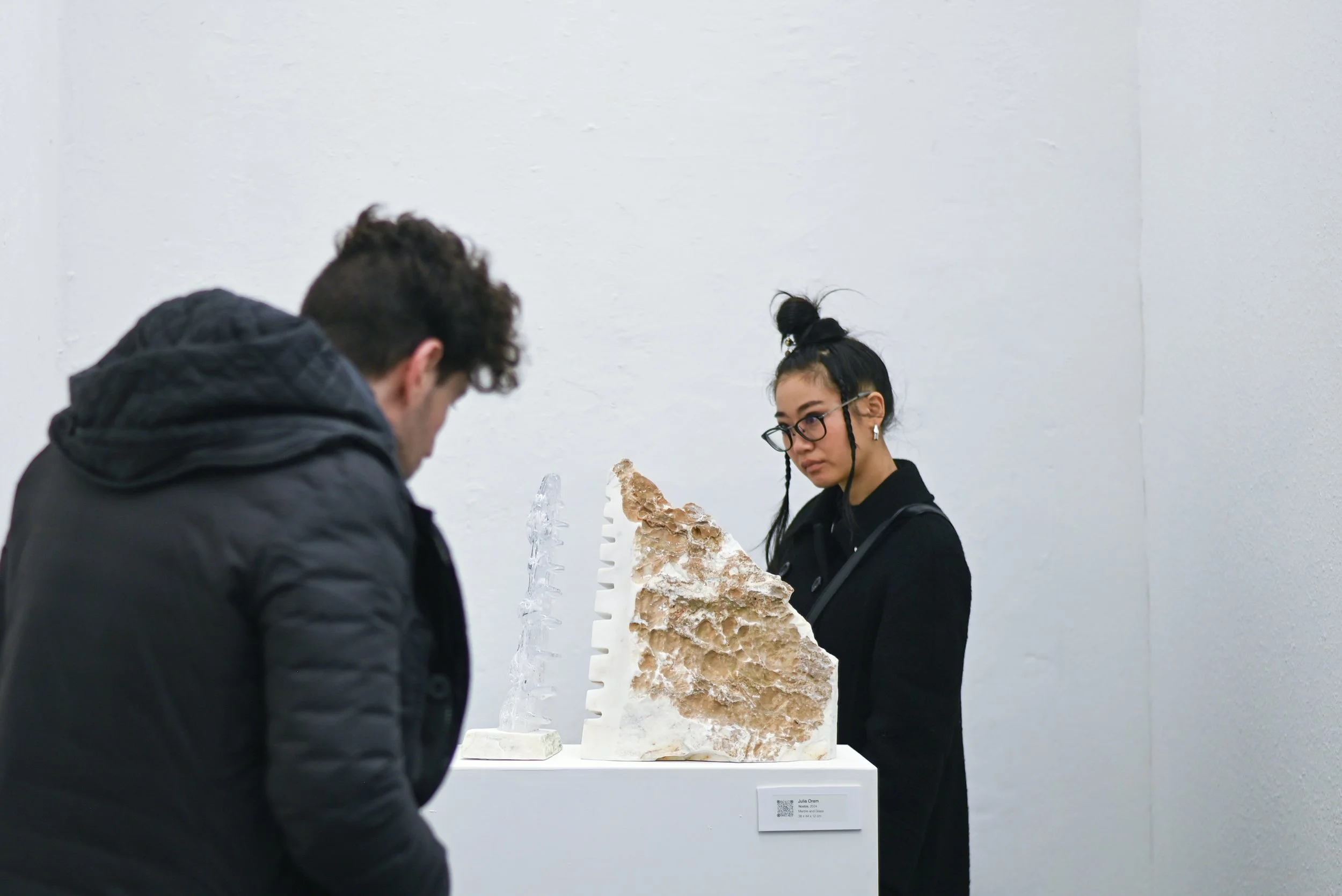
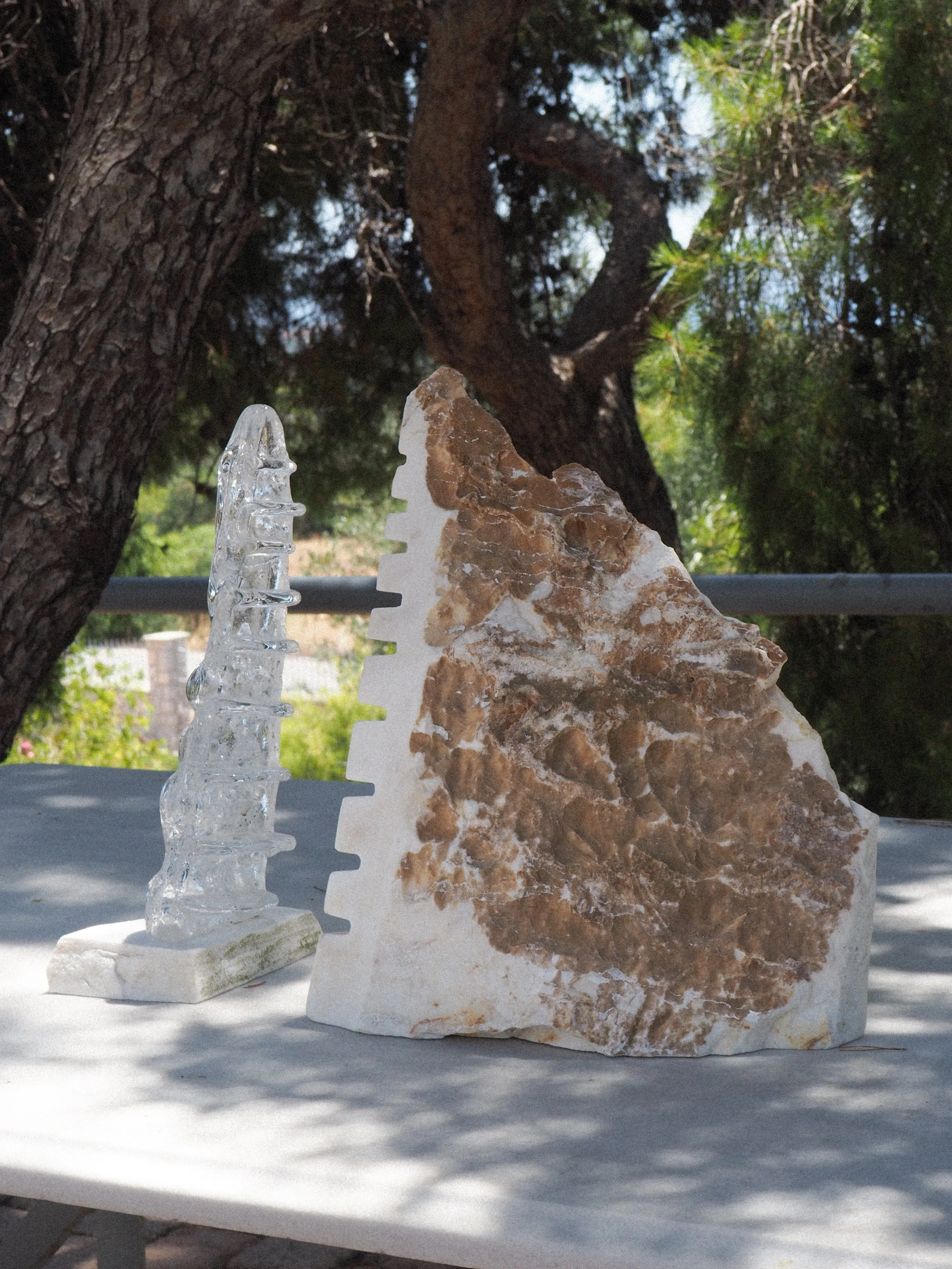
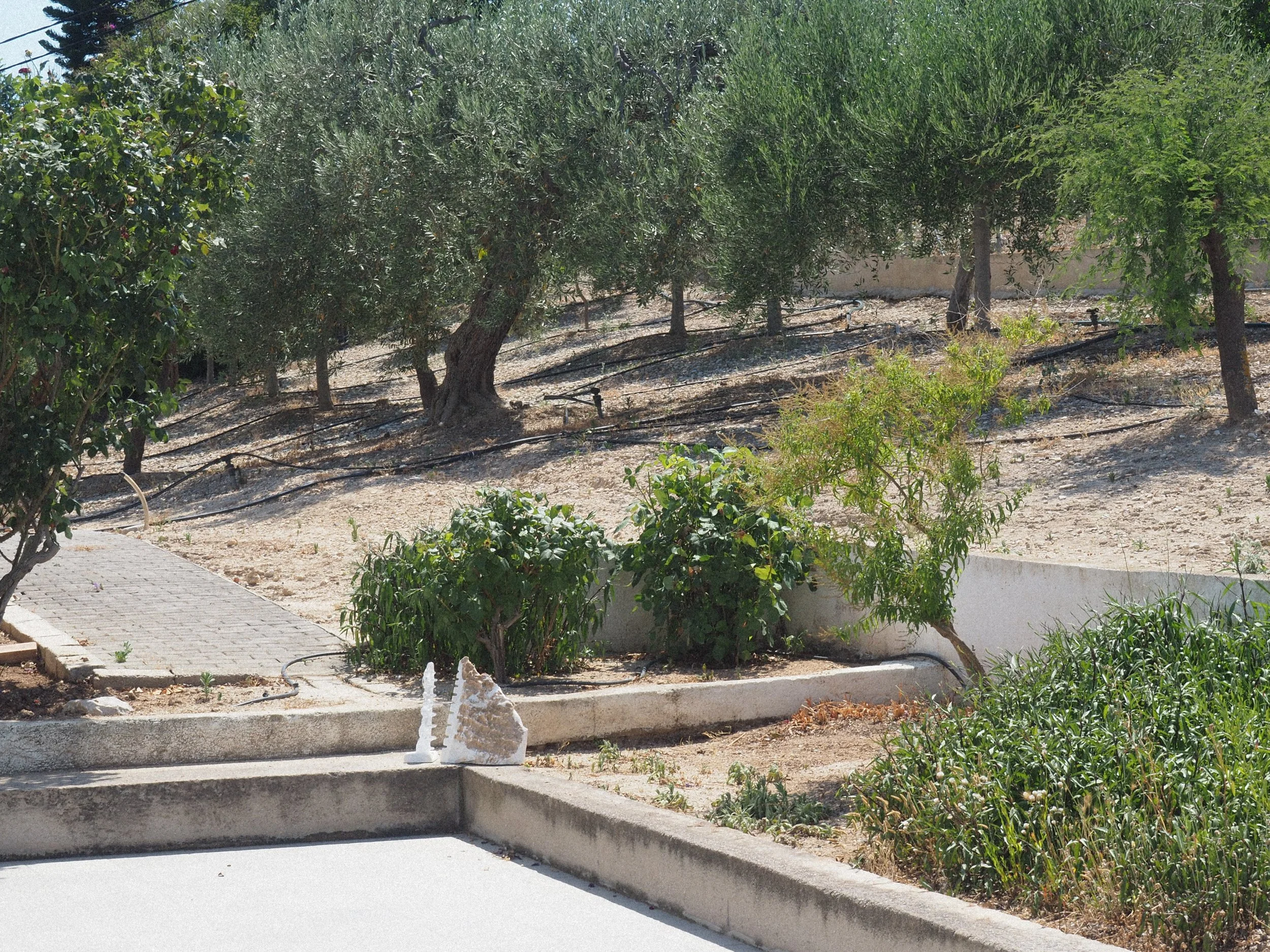
Nostos I, focuses on abstraction and essence drawing parallels to the Archaic period’s approach to simplicity and the distillation of form. Much like the kouros statues aimed to capture the eternal, Nostos expresses universal truths through minimalism. These gendered forms one exposed, the other veiled raise questions that resonate in contemporary contexts: Why were the women always draped, while the men were bare? How did these portrayals shape the very foundation of Western aesthetics and our collective understanding of beauty?
Kouros statues (Kouro for male, Korai for female) reflect early ideals of form and beauty in ancient sculpture. The male figures were typically nude and symmetrical embodying strength, youth, and classical notions of handsomeness. In contrast, the female figures were clothed, adorned with accessories, and shaped to reflect grace, modesty, and an idealised youthfulness.
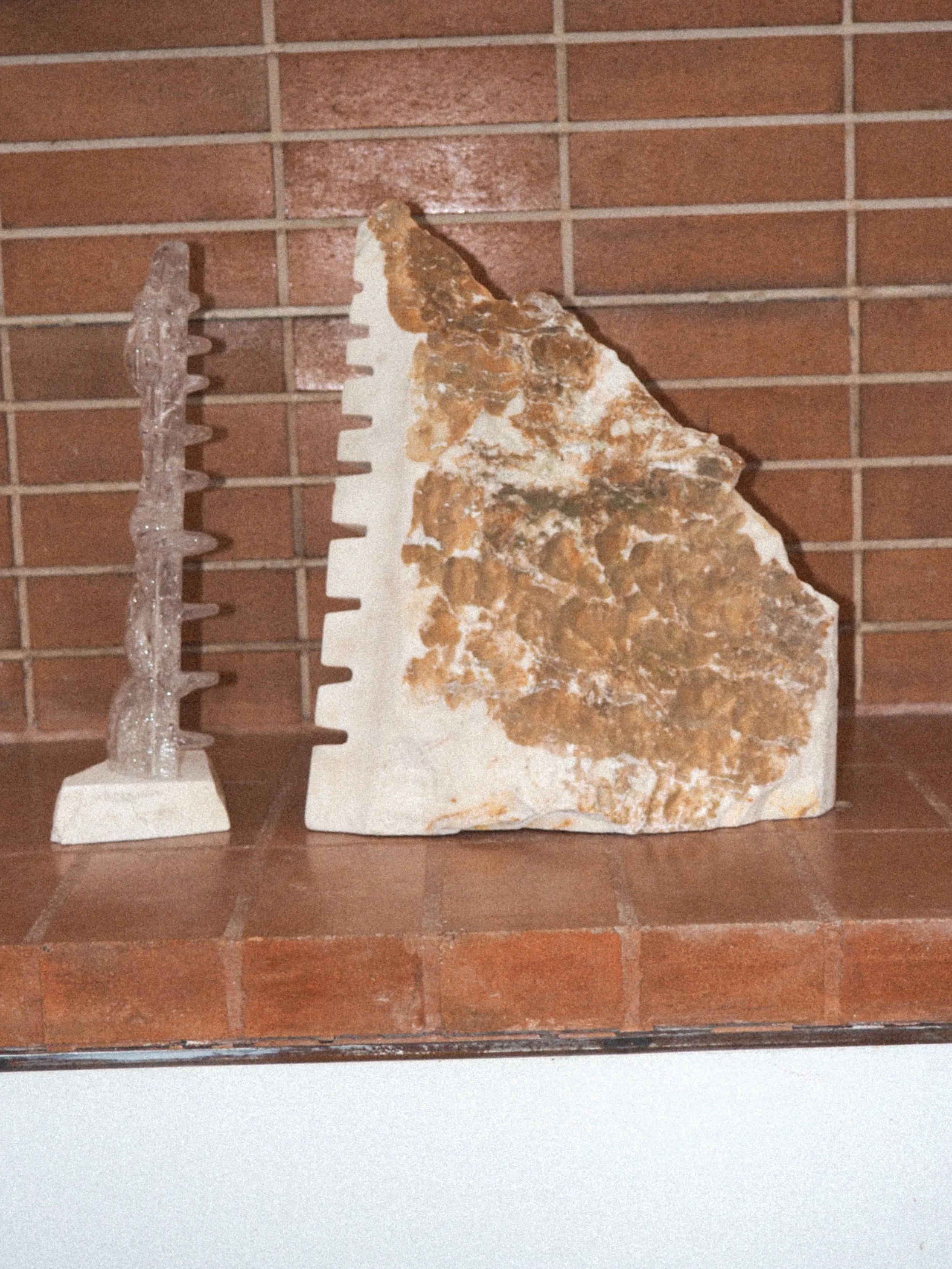
Nostos I (Marble and Glass), 2025
Marble and cast glass
Unique work
The work juxtaposes the permanence of marble with the transparency of glass, carving a dialogue between excavation and emergence. The stepped cuts recall architectural traces, a rhythm between what is removed and what remains. It stands as a quiet study of memory embedded in material.
Stone L: 36 cm W: 12cm H: 44cm
Glass L: 12cm W: 15cm H: 40cm
Price: Upon Request (Currently held at Sabi Gallery in permanent collection)