Thoughts That Grew Limbs
When I was asked to curate Thoughts That Grew Limbs, it felt like stepping into an ongoing conversation; my role was to listen. It became a reminder that creation often begins where control ends. I thought about how collaboration becomes a kind of conversation within artistic investigation, where two practices begin to overlap and respond, creating a third presence in the work. Art theorist Charles Green refers to this as the “phantom artist.” Through this process, a new language begins to form. By finishing each other’s gestures, Benro and George create something that belongs to both, and to neither. I wanted the exhibition to feel open and human, to show that collaboration isn’t just possible, but necessary. Through visual conversations, new dimensions of authorship, influence, and originality emerge, and I’m honoured to have been part of that process.
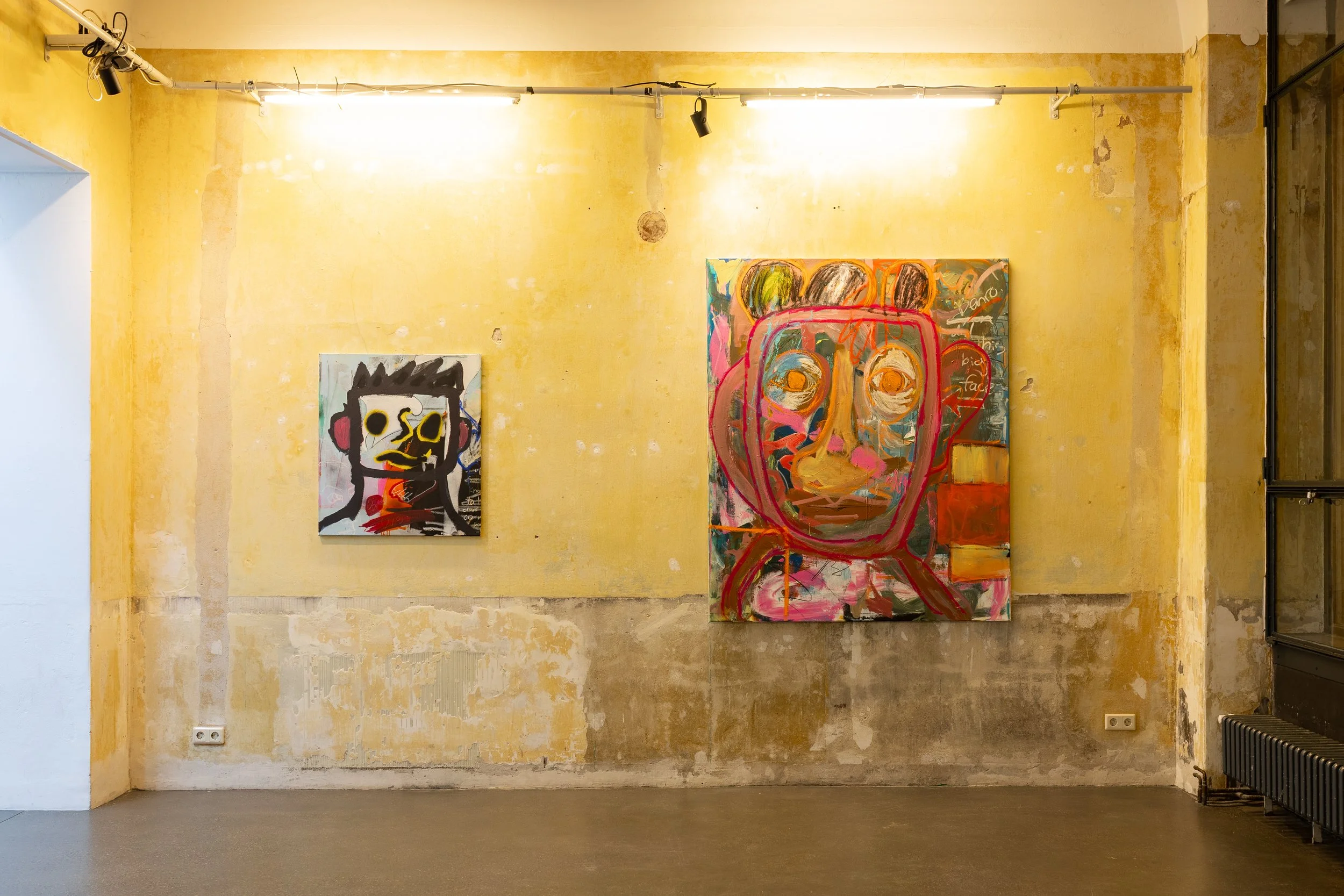
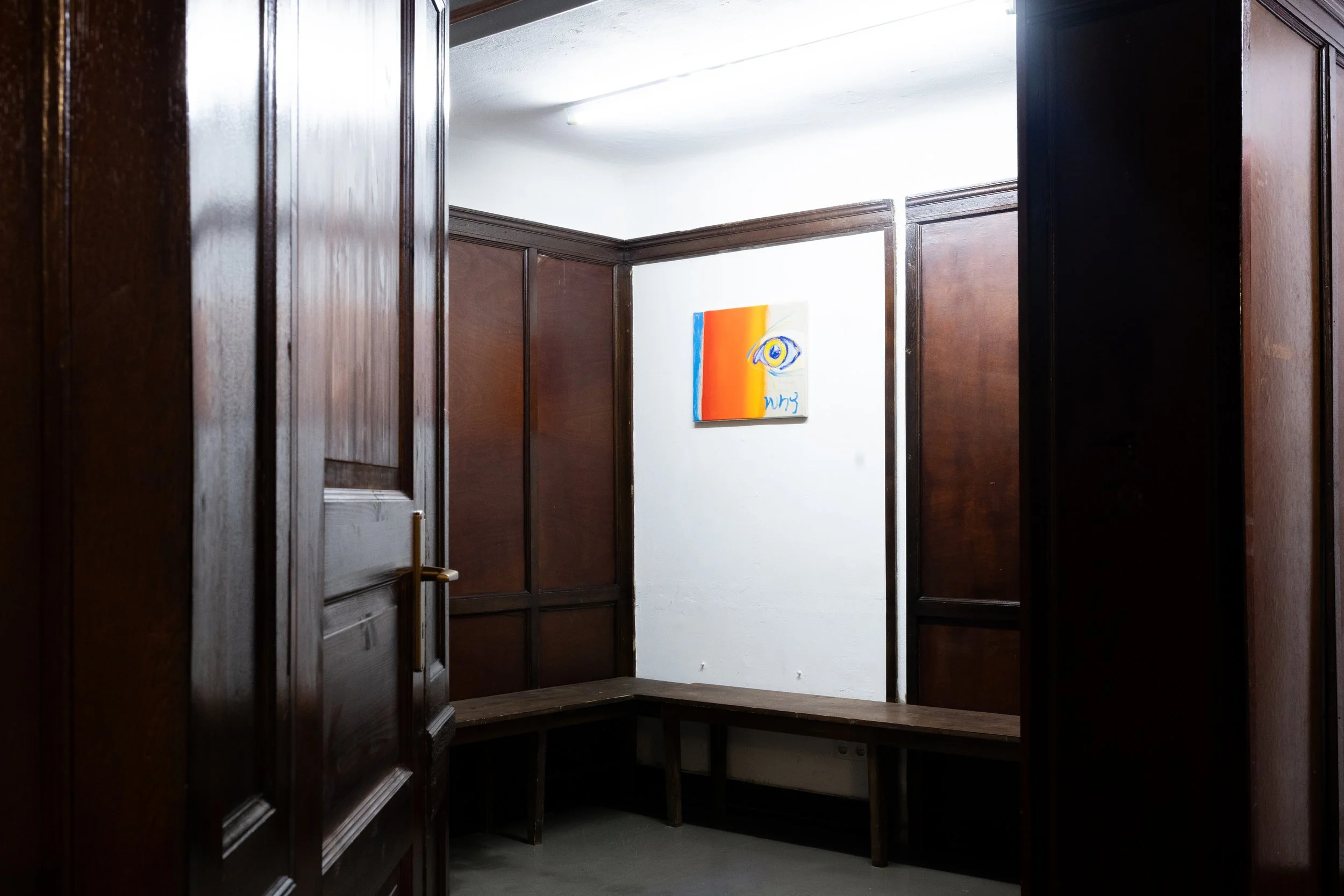
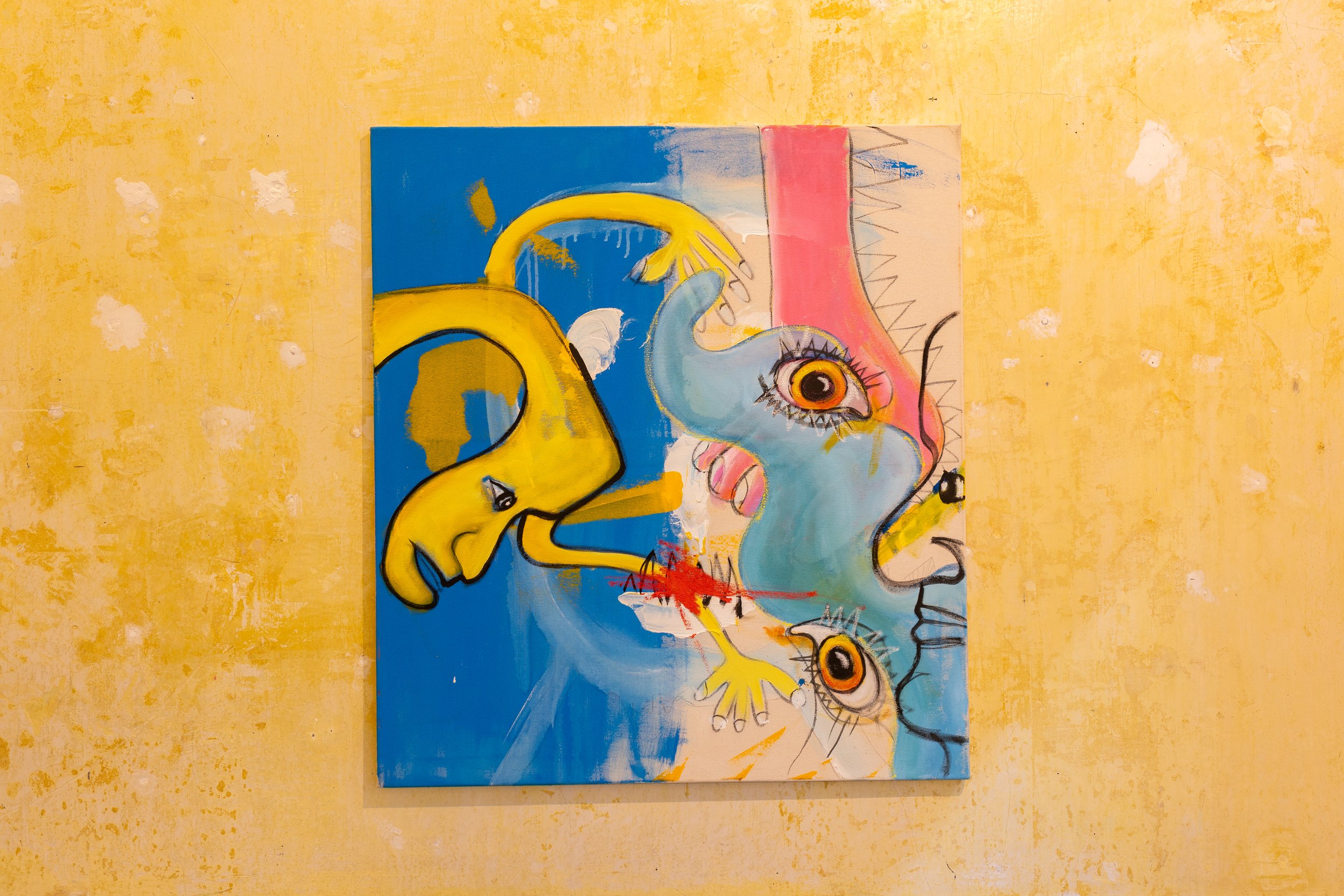
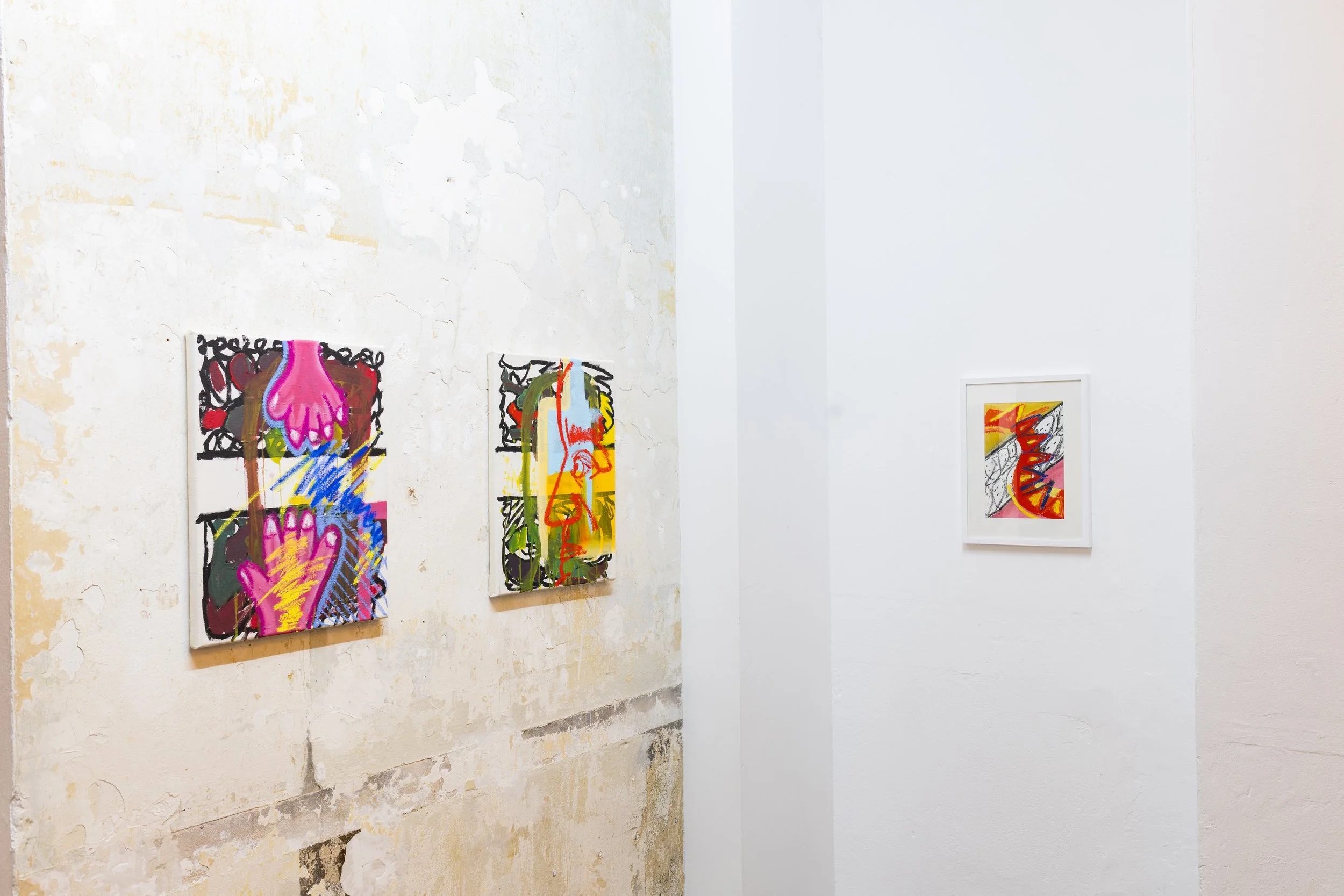
Thoughts That Grew Limbs presents a series of collaboratively produced paintings by Berlin-based artists Benro Adegbenro (b. 1990) and George Oates (b. 1993). The exhibition centres on intuitive exchange, in which the artists work directly into one another’s gestures. Through continuation, each painting becomes a site of neutrality, where authorship is shared, and reconstituted in real time.
In this conversational process, the paintings drift away from individual intention, and instead showcase a visual language that neither artist could produce alone. The final works emulate authenticity, but it’s the process that tells the real story. The concept of the “third hand” emerges, signalling a presence from the act of making together and forms the becoming.
The curatorial approach responds to this relational process by framing the exhibition as a spatial conversation. The narrative is shaped by allowing the works to speak to one another whilst complimenting the architecture of Salon am Moritzplatz.
Thoughts That Grew Limbs is about possibility, it asks us to think about the ways we connect, and respond. Its inviting viewers to observe the works and to pose those questions such as: Can art that emerges from relation rather than individuality encourage us to rethink identity, responsibility, or connection?